The category of sours is as enjoyable as any you will find in beer. The style has grown in popularity over the last decade, from a relatively obscure type to becoming a dependable favorite of the craft movement. It is one of the oldest ales on Earth. Stranger still is the fact that despite their celebrity status, sour beers are difficult to define, even if you ask its most ardent drinkers. This is all to say that if you are thirsty for clarity, you’re not the only one.
A beer, by any other name, would taste sweeter.
According to Garrett Oliver (reigning brewmaster at Brooklyn Brewery), a “sour beer” is any beer in which Acidity forms the backbone or flavor structure. Hop bitterness is what plays the role of tannins in red wines for most beer beers. Sour beers are more similar to white wine with acid in their middle.
This organoleptic way of defining the style is based on whether we feel sourness in the tongue. This is a relative measure of how acidic or sour a beer tastes.
Do you remember pH in high school chemistry? It stands for “potential hydrogen” and is a logarithmic indicator of the concentration of each of these ions in solution. A liquid with a pH of 7 is neutral, while a drink with a pH of 6 is ten-fold more acidic (ten times more hydrogen ions). A standard ale or Lager is usually in the pH range of 4-5. A sour beer will have a pH of three. Although it doesn’t sound like much, this is 10,000 more acidic than water.
How does Sour get its power?
This general flavor profile can be tailored in many ways. Oliver adds that sour beers are often acidic using lactic acid-producing bacteria strains. Although wild yeasts can produce acids, lactobacilli (the same bacteria that causes sour cream) are the leading players.
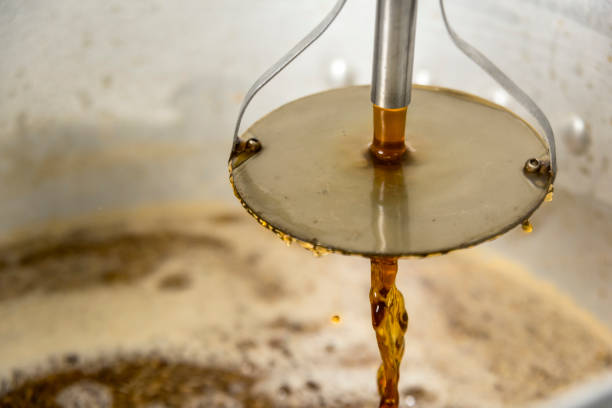
You can add these microorganisms at different stages of the brewing process to achieve a different effect. They are added to the wort (the wort which is the grain-steeped liquid that supplies sugars for fermentation) for a one-to-two-day period before being boiled and fermented like traditional beer. This results in a lighter tartness, which is more noticeable through the aroma than the palate. Mixed fermentation is when yeast and bacteria are added to the beer. This lowers the beer’s pH as it absorbs alcohol.
Flaw or Feature? It all depends on who you ask.
Wild ale is a sour-adjacent beer in which ambient yeasts spontaneously ferment the wort. Belgians have been making beer this way since at least 13 centuries ago, using a lambic style. This is why German beer-makers, who are known for their beer purity laws, generally hate the kind. They are more inclined to see it as a problem than a strength.
Many modern brewers fear wild yeast strains like Brettanomyces could infect their production lines. On the other hand, the Belgians found a way to keep consistency year after year by mixing several lambic vintages into a batched category called “gueuze.” It continues to ferment even after bottling, earning it the unofficial moniker “The Champagne of Brussels.”
It’s often called American Wild Ale when it is produced domestically. This is because it is more commonly known as the Russian River Brewing Company. This renowned operation from Santa Rosa, California, helped popularize this style in the United States. These beers can be tart, but grouping them with other sour beers is easier to explain to consumers. Vinnie Cilurzo, the co-founder of Russian River and brewmaster, says that Brettanomyces yeast only produces a few acids. It adds more wild and funky qualities to the beer. It is also essential to know the difference between acidic and tart. We need a light acid contribution, which I call acidic. However, we don’t want acid, which is more like balsamic vinegar.
Sours taste different. And not all sours can be considered sour, regardless of the Titratable Acidity (a measure of acid concentration in food and drink) that may be listed on the label. Like any beer style, a skilled brewmaster extracts the intended flavors from beer by design and leaves little to chance. Russian River ages the beer in barrels with brett and lacto (lactobacillus or pediococcus) for long periods. Over time, these yeasts and bacteria slowly develop tart and wild flavors that all microorganisms can contribute, says Cilurzo. These beers can sometimes be very sour, but we aim for a subtler contribution. I prefer Brett’s contributions to these beers to the sourness of the two bacteria.
Are Sour Beers a Good Source of Probiotics?
Some sours found on shelves today have a typical flavor profile with Kombucha. Some health-conscious drinkers have begun to wonder if sour beer, like its piquant cousins, can be considered “probiotic.” Here Garrett Oliver, the tea brewer, pours it.
“In the simple sour — also known by ‘kettle-sour’ technique, the wort is boiled after their souring. No probiotic bacteria survive. However, both wild-fermented and mixed-fermentation beers will contain live bacteria unless pasteurized.
However, some things may not be as appealing to those who want gluten-free beer. Oliver points out, however, that the beer that is made from gluten-free grains will also have gluten, regardless of how bitter or sour it is.