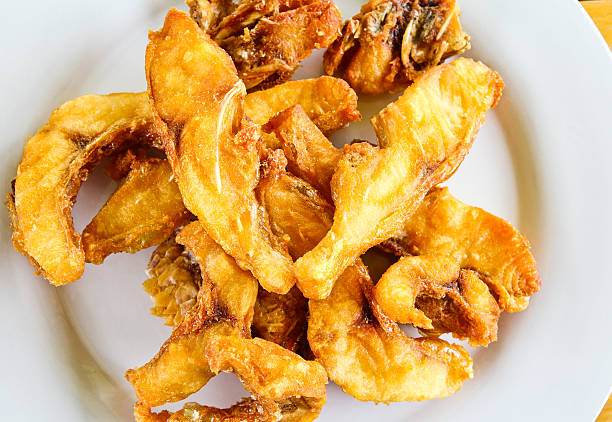
Yes, I lied. In my Baked Onion Pakoda recipe, I promised I would never return to fried food because baking is good for your health. Here we are again with monsoon snacks! Rainy day in Bangalore weather; who could resist? Pakoda to ta hai! This recipe is for people who believe in selective diets (as and when they please basis, LOL). Make these your cheat day treat! If you have a strict diet or are craving pagodas, the healthier baked version is a better option.
We all love crispy pakodas, and I will tell you what two things I pay attention to when making kanda bhajia. These are the ones that will make them crisp and crunchy, just like the chaiwala down the street.
First, chop the onions right.
Onions are one vegetable that has a high water content. We don’t let that water make our pakodas too watery. The risk of soggy pakodas is that thick slices can be cut. To coat the batter properly, cut the onions into thin pieces. You can use a mandolin, a spiralizer, or a sharp knife to make thin slices. This will make them crispier and cook faster.
Second, prepare a dry mixture.
Because of their high water content, onions tend to retain water. A watery batter won’t work. We have learned to use a dry batter with very little water to coat the onion pakoras. This does not make the outer layer too thick or blubbery.
I mix rice flour and chickpea flour. The chickpea flour is very bindable, and the rice flour gives it an extra crispness.
Our top tips for making the best pagodas.
- Season the batter and onions nicely before you fry them. It does make a difference!
- Mix the dry ingredients into the onions. Let it rest for a while before adding water. The onion will release water during the cooking process, allowing the batter to coat the onions.
- Before you fry, make sure the Oil is warm. The Oil should be hot enough to fry the pakoras. If it isn’t, they will absorb the Oil, making it taste oily and producing soggy pakodas. Before you fry the entire batch, make sure to test one pagoda.
- Mix these with tomato ketchup/HT0_ Green Coriander Chutney for maximum satisfaction.
- To go with the pakodas, serve them up with one of these 5 Amazing Chai recipes
Ingredients
Three thinly sliced Onions (approx 1/8 inches)
1 cup Gram flour or Besan
Three tablespoons of Rice Flour
Two teaspoons Chilli Powder or Paprika
A pinch of Asafoetida or Hing
1/4 teaspoon Ajwain
Two teaspoons Salt
One tablespoon of Ginger Garlic paste
A pinch of Baking Soda
1 1/2 cups Oil for deep frying
Instructions
- Slice onions thinly and let them soak in water. Keep aside.
- Place the chopped onions in a bowl. Mix gram flour, rice flour, and chilli powder. Add salt, ginger garlic paste, baking soda, and ajwain. Mix the dry ingredients with the onions and then smash the onion pieces with your hands. After a while, toss the onions in the dry mixture once or twice. The dry batter will turn semi-wet, and the onions will release water. To create a thick coating, add a tablespoon of water.
- Over medium heat, heat oil in a kadai or deep pan. Drop a small onion slice into the hot oil to check that it is not too hot. It should quickly rise to the top.
- Drop the battered onions in small pieces into the Oil. Don’t overcrowd. To ensure that the pakodas get cooked from the inside, fry them on medium heat. It will take approximately 3-5 minutes.
- Use a skimmer to remove the pagoda. Drain the Oil. Transfer to a towel and allow the Oil to soak on the towel. Serve hot with chaat masala and sprinkle on top.
Notes
- Slice the onions to approximately 1/8 inch. They will take too much time to fry if they are thick enough. If they are too thin, they will burn quickly.
- Vegetable Pakoras and pakoras made with methi, spinach, brinjal, or methi leaves can be made.
- If rice flour is not readily available, you can use gram flour to make pakoras. We recommend rice flour to make these pakoras extra crispy.
- Another delicious variation is the Paneer Pakoras Cottage cheese.
- Pakoras are not suitable for storing. Fry them immediately.